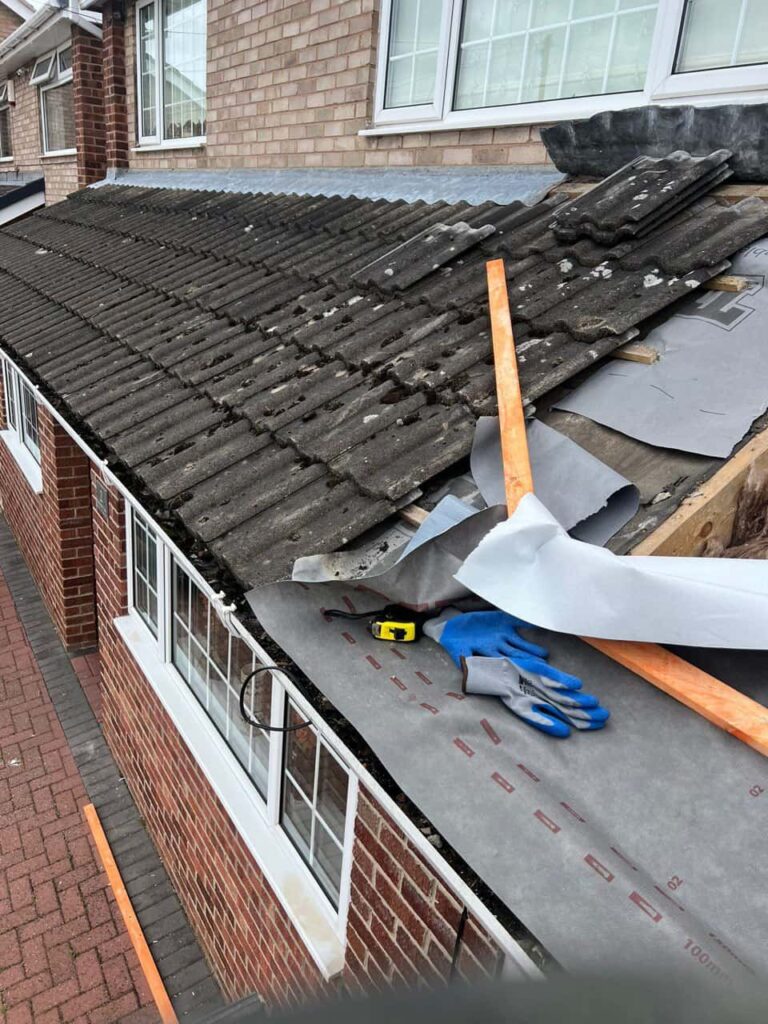
Understanding Why a Roof Leak May Keep Returning
A roof that continues to leak after several repairs can be frustrating, but the recurrence usually has an identifiable cause. In many cases, the earlier work has addressed the most visible symptom without resolving the route by which water is entering or travelling through the roof.
Roof leaks can be difficult to diagnose because the internal damp patch may be some distance from the external defect. For property owners in Wendover, Buckinghamshire, a detailed roof assessment is often the most effective way to break the cycle of repeated repairs and establish what is happening across the wider roofing system.
The Visible Leak May Not Be Below the Defect
Rainwater does not always drip directly beneath its point of entry. Once it passes through the external covering, it can travel along:
- Roofing underlay
- Timber battens
- Rafters and other structural timbers
- Pipes and cables
- Insulation
- Ceiling surfaces
A repair completed directly above an internal stain may therefore miss the true source. The leak can appear to stop temporarily during lighter rain, only to return when wind direction or rainfall intensity changes.
More Than One Defect May Be Present
A roof can contain several weaknesses at the same time. Replacing one cracked tile may correct one entry point while leaving another defect nearby.
Multiple leaks may be associated with:
- Slipped or broken tiles
- Deteriorated lead flashing
- Cracked mortar around ridge or verge details
- Damaged valleys
- Failed seals around roof penetrations
- Worn flat roof joints
- Blocked drainage
- Defective chimney details
A broader inspection is important when leaks occur in different conditions or seem to move between internal areas.
The Original Repair May Have Treated Only the Symptom
Temporary sealing and isolated patching can sometimes stop water briefly, but they may not address the reason the material failed. If a tile keeps slipping, for example, the problem may involve a weakened fixing or deteriorated batten rather than the tile itself.
Similarly, applying sealant around failed flashing may not provide a lasting solution if the lead has split, lifted or pulled away from the adjoining surface. Effective repairs should correct the defective component and investigate what caused its failure.
Adjacent Materials May Also Be Deteriorating
Roofing components work together. When one area fails, nearby materials may already have experienced the same weathering, movement or moisture exposure.
A repair can be technically sound while the surrounding roof continues to deteriorate. This is particularly relevant where:
- Several tiles have become brittle
- Fixings are corroded or weakened
- Underlay has torn or degraded
- Mortar is failing across a wider section
- Previous patch repairs have created multiple joints
- Water has affected nearby timber supports
Assessing the surrounding area helps determine whether the defect is genuinely isolated.
Flashing and Roof Junctions Can Be Difficult to Diagnose
Chimneys, valleys, roof windows, dormers and wall abutments create changes in the roof surface. These junctions depend on carefully formed flashing and weatherproof details to direct water away.
Small gaps can admit wind-driven rain without being obvious during a dry inspection. Temperature changes may also cause materials to expand and contract, opening a defect that appears closed at other times.
Persistent leaks near a roof junction should be investigated as a complete detail rather than treated as a single visible crack.
Poor Drainage Can Keep Exposing the Same Area
Blocked gutters, valleys and outlets can change how water moves across a roof. Instead of draining away efficiently, rainwater may collect, overflow or back up beneath roofing materials.
Repeated leakage may continue if the repair does not address:
- Debris accumulating in a valley
- Incorrect falls on a flat roof
- Blocked outlets
- Overflowing gutters
- Water discharging onto a vulnerable junction
- Damaged or poorly positioned guttering
Restoring effective drainage can be just as important as repairing the roof covering itself.
Condensation May Be Mistaken for a Roof Leak
Not every damp patch is caused by rainwater entering from outside. Condensation can form within a poorly ventilated roof space when warm, moisture-laden air meets a cold surface.
Possible signs of condensation include widespread moisture, damp insulation, water droplets on roofing underlay and recurring mould. A leaking roof and condensation can also exist together, making the diagnosis more complicated.
The timing and distribution of the moisture should therefore be considered before repair work begins.
Weather Conditions Can Affect How a Leak Appears
Some leaks only become apparent during prolonged rain, while others occur when strong winds drive water beneath tiles or flashing. A roof may remain dry during one rainfall event and leak during another because the direction and intensity are different.
Useful information for diagnosing a recurring leak includes:
- Whether it appears during light or heavy rain
- The direction of the wind
- How long the rain has been falling
- Whether the damp patch appears immediately or later
- Whether the affected area changes
- Whether the problem follows freezing conditions or storms
These details can help a roofer narrow down the likely entry point.
Why a Full Roof Assessment Matters
When a leak has returned after several repairs, the next step should be a structured assessment rather than another isolated patch. This may include examining the roof covering, flashing, valleys, chimneys, drainage and earlier repair areas.
Where accessible, the roof space can provide valuable evidence. Damp timbers, water staining and marked underlay may reveal the path moisture has taken.
A thorough assessment allows the roofer to distinguish between:
- One unresolved local defect
- Several separate entry points
- Deterioration across a larger section
- A drainage or ventilation problem
- Damage beneath the visible roof covering
This root-cause approach reduces the likelihood of repeating work that does not address the complete problem.
Conclusion
Repeated roof leaks usually continue because the original entry point has been misidentified, several defects are present or deterioration extends beyond the repaired section. Failed junctions, poor drainage and condensation can also create symptoms that resemble a straightforward leak.
If your roof in Wendover, Buckinghamshire, continues to leak despite previous attention, LS Roofing Wendover can carry out a detailed assessment of the affected area and surrounding components. Identifying the root cause is the most reliable basis for recommending an appropriate, lasting repair.
Call us on: 01494 976 497
Click here to find out more about LS Roofing Wendover
Click here to complete our contact form and see how we can help with your roofing needs.